
Is 3 Days Too Much for Kumarakom? Here’s How to Do It Right
Kumarakom is one of those places people hesitate to commit time to.
Two days feels safe. One night feels efficient. Three days often triggers a question that says more about how we travel than where we’re going. What will we even do there for three days?
I’ve been to Kumarakom twice, and both trips answered that question in very different ways. The first time was an anniversary surprise for my wife. No packed plans, no sightseeing checklist. Just a private cottage by the backwaters, silence, and time we weren’t trying to optimise. The second visit was years later, in August 2025, again with my wife, staying at a more structured, four-star resort.
Two stays. Two moods. Same place.
And somewhere between those two trips, I realised this. Kumarakom is not a destination you visit to do things. It’s a place you go to stop doing them.
Why people doubt Kumarakom beyond two days?
The hesitation around Kumarakom usually comes from one assumption. That travel must be filled. That time away needs activities, movement, proof.
Kumarakom doesn’t offer that kind of validation.
There are no dramatic viewpoints you rush to before sunset. No aggressive sightseeing circuit. No sense of falling behind if you sleep in or cancel plans. For travellers used to motion, Kumarakom can feel almost confrontational in its stillness.
That’s why the idea of three days feels excessive to some. Not because Kumarakom lacks experiences, but because it asks you to slow down mentally before anything else makes sense.
If you arrive with an itinerary mindset, three days will feel long. If you arrive with a pause mindset, three days will feel just right.

The first trip: learning how quiet can feel full
My first visit to Kumarakom was meant to be intimate. I surprised my wife on our anniversary and booked a private backwater cottage at Little Chembaka. Tucked away from noise, sitting right by the water, it was the kind of place where days blended into each other without effort.
What I remember most from that trip isn’t a specific activity. It’s the rhythm.
Mornings began slowly, without alarms. Afternoons disappeared between meals and watching the water shift colour. Evenings were spent sitting outside, watching the sky change and boats pass by without feeling the need to follow them.
There was something deeply grounding about staying so close to the backwaters. You don’t just see them, you live alongside them. The silence isn’t empty. It’s layered with sounds you don’t notice in cities. Water moving gently. Birds calling out. The occasional engine hum passing at a distance.
Those two nights taught me something important. Kumarakom doesn’t reward planning. It rewards presence.
Returning years later: comfort, space, and a different pace
When we went back in August 2025, we stayed at Ripple Backwater Resort, a four-star resort experience that offered more structure, more space, and a different kind of calm.
This trip felt less about retreat and more about comfort. Long walks within the property. Spacious rooms. Defined meal times. Pools and open areas that encouraged lingering without feeling confined.
What surprised me was how Kumarakom adapted to this change in travel style without losing its essence. Even with more amenities and people around, the pace never felt rushed. The backwaters still dictated the mood. Sunsets still slowed everything down. Even conversations seemed softer.
It reinforced a simple truth. Kumarakom works across formats. Private homestays, boutique cottages, or resorts. What matters more than where you stay is how willing you are to let go of urgency.
What you actually do in Kumarakom
This is where most itineraries fail, because they try to force structure where none is needed.
In Kumarakom, doing less is the experience.
You spend time by the backwaters, not as a one-hour activity but as a constant presence. The water is always there, changing slightly through the day, reflecting light differently in the morning, afternoon, and evening.
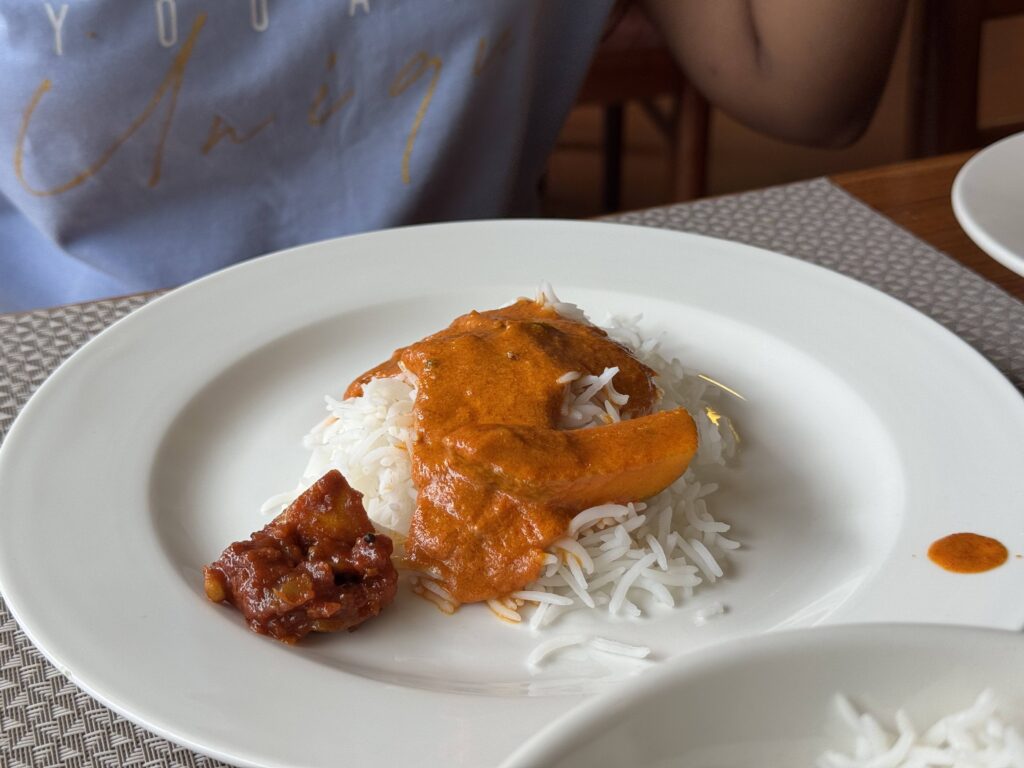
Food becomes a highlight because you’re not eating between plans. You’re eating because it’s time to eat. Meals stretch longer. Flavours register more clearly. Kerala’s food, especially around Kumarakom, is comforting and unpretentious. Fresh fish, coconut-based curries, simple breakfasts, and slow lunches that make you forget what time it is.
Sunsets are not events here. They’re rituals. You don’t schedule them. You just know when to step outside.
And then there’s the act of doing nothing. Sitting. Watching. Letting thoughts wander without trying to capture them. This is not passive travel. It’s intentional rest.

The backwaters aren’t an activity, they’re a backdrop
One mistake people make is treating the backwaters as something to “do” once and move on.
In Kumarakom, the backwaters are not a checkbox. They’re the setting. Whether you’re on a short boat ride, watching houseboats drift past, or simply sitting by the water, they define the experience without demanding attention.
That’s why rushing a backwater ride into a tight itinerary often feels underwhelming. The real impact comes when the water becomes familiar, when you stop noticing it consciously but feel its presence constantly.
This is also why staying right by the backwaters matters more than staying close to attractions. Proximity changes perception.
Why three days isn’t too much if you travel the right way
Three days in Kumarakom only feels excessive if you’re trying to fill time.
If you let go of that instinct, the days stretch gently. You wake up without urgency. Afternoons don’t need justification. Evenings feel earned simply by being present through the day.
On both trips, I noticed the same thing. By the second day, my mind slowed down. By the third day, I didn’t want to leave.
That transition doesn’t happen overnight. It needs time. That’s why two days often feel incomplete. You arrive, slow down slightly, and then leave just as your body and mind begin to settle.
Three days allow that shift to complete.
Who Kumarakom is actually for
Kumarakom is not a universal destination, and that honesty matters.
It is ideal for:
- Couples looking to disconnect together
- Travellers who enjoy quiet over stimulation
- People burnt out from fast-paced travel
- Anyone comfortable sitting with stillness
It is not ideal for:
- Travellers who need constant movement
- People who equate value with packed days
- Those chasing nightlife or adventure activities
This isn’t a flaw. It’s clarity.
How to do Kumarakom right
If there’s one place where a light guideline helps, it’s here.
- Choose a stay by the backwaters, not just near them
- Don’t over-plan activities before arriving
- Let meals, sunsets, and rest anchor your days
- Accept that boredom might appear briefly before calm replaces it
That’s it. Anything more becomes counterproductive.

Final perspective
Kumarakom doesn’t need defending, but it does need understanding.
Three days are not too much for Kumarakom if you’re willing to travel differently. If you arrive expecting entertainment, it will disappoint you. If you arrive ready to slow down, it will give you something rare.
Both times I visited, Kumarakom met me exactly where I was in life. Once as a quiet anniversary escape. Later, as a comfortable, reflective return. In both cases, the place didn’t change. I did.
And that’s what makes Kumarakom special.
It’s not a destination you rush through.
It’s a place you let happen.
Recently published

Welcome Traveller!
From hidden gems in India to international adventures, I focus on honest recommendations, smart travel ideas, and experiences that are worth your time and money. My goal is simple — inspire people to travel more, explore deeper, and experience destinations beyond the usual tourist checklist.

